Homemade recipes
How Many Calories Are in a Smoothie?
Find out how many calories are in a smoothie by summing weighed ingredients, since blending and dilution never change that total.
Guides
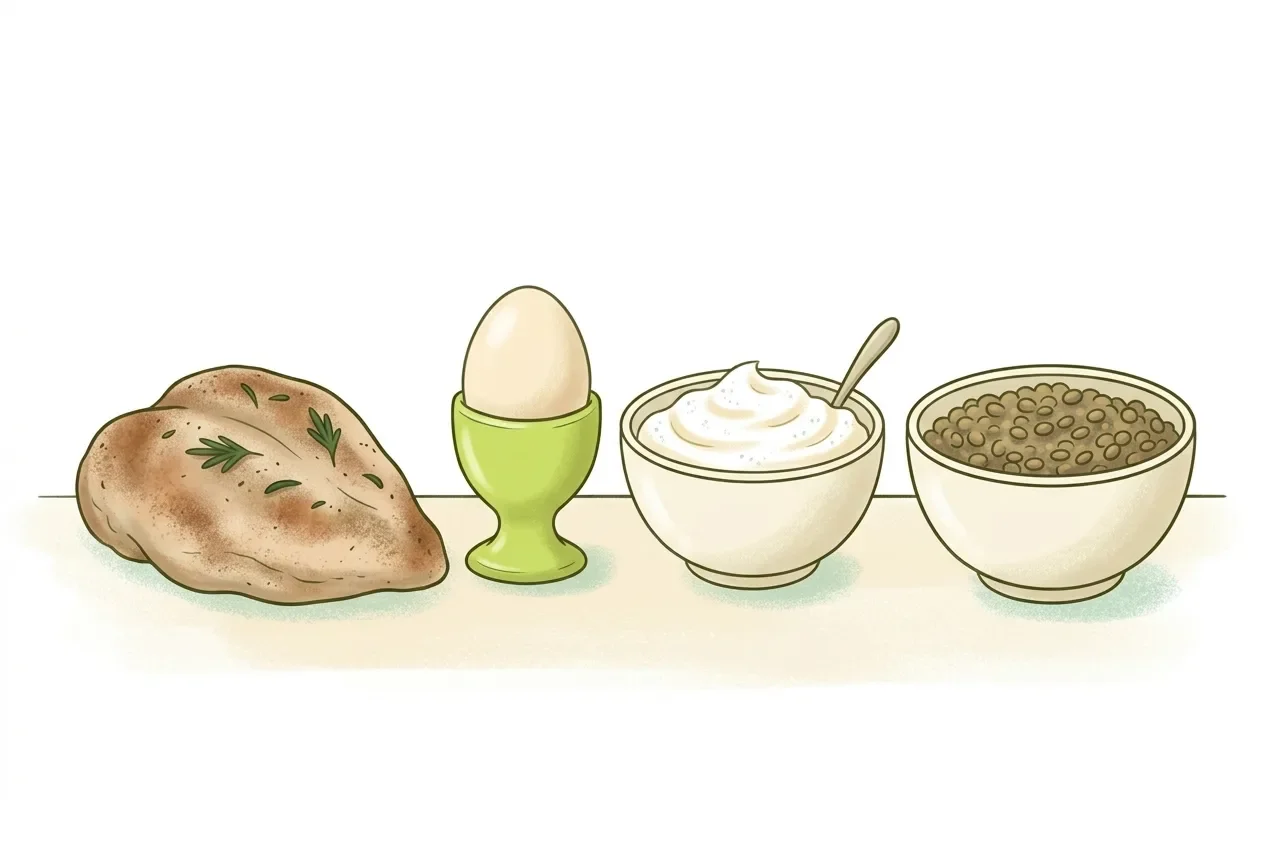
Protein is hard to eat enough of because the foods people call "protein foods" are mostly water and fat by weight. Hitting a number takes more volume than it looks like on a plate. Protein is also the macronutrient that fills you up fastest, so appetite runs out before the day does. Spreading protein across meals and choosing foods dense in protein per calorie fixes most of the shortfall, no powder required.
In short
- Roasted chicken breast is about 31 g protein per 100 g, a whole egg about 12.6 g and Greek yogurt about 10.2 g, according to USDA FoodData Central.
- A 2014 Journal of Nutrition study had 8 healthy adults follow each of two meal-protein patterns for about a week, in a crossover design, then measured 24-hour muscle protein synthesis on day 1 of each arm. The evenly spread pattern produced about 25% higher synthesis than the pattern concentrated at dinner.
- A 2012 review in the British Journal of Nutrition describes protein as the most satiating macronutrient per calorie, which shortens appetite before the day's meals are done.
Chicken breast looks like a protein food because so much of its calories come from protein. But it is still mostly water by weight. USDA FoodData Central lists roasted, skinless chicken breast at 31 g of protein per 100 g, alongside 165 kcal and 3.6 g of fat. Subtracting the protein and fat from the 100 g total leaves about 65 g. That remainder is water and trace minerals, so cooked chicken breast is well over half water by weight even after cooking removes some of it.
A food can be protein-dominant in its calorie makeup. It can still deliver a modest number of grams per 100 g. Water carries no calories and no protein, but it takes up most of the weight on the plate.
This is why a chicken breast that looks like a full protein-rich meal can leave a person short of what they expected. Both the per-100 g density and how much of the food is actually eaten determine how much protein lands in a meal, and the density is usually the part people don't notice.
Most foods people reach for to raise protein are a smaller fraction of it than they appear. Water and fat make up the rest of the weight. USDA FoodData Central records put roasted chicken breast at 31 g protein per 100 g, a whole raw egg at 12.6 g, plain nonfat Greek yogurt at 10.2 g, and cooked lentils at 9.0 g.
Eggs and yogurt are often treated as protein staples. They sit closer to one-eighth and one-tenth protein by weight. Lentils, a common plant source, are below one-tenth. None of these numbers describe a food that is mostly protein. They describe foods where protein is present but diluted by water, and in the case of eggs, fat.
Protein is described as the most satiating macronutrient per calorie in controlled feeding research, according to a 2012 review in the British Journal of Nutrition by Westerterp-Plantenga and colleagues. The review reports that protein intake works through changes in satiety hormones, including ghrelin and GLP-1. It also reports that protein of 0.8 to 1.2 g per kg of body weight per day is enough to sustain satiety and fat-free mass. That holds regardless of how many carbohydrates are also eaten.
This matters for the evening shortfall many people notice. If protein is the macronutrient that switches off hunger fastest, a day built around convenient carbohydrate and fat calories, like bread, oil and snacks, can fill a person up before enough protein has been eaten. The appetite closes the door before the gram total gets there, which is a mechanism, not a failure of planning.
Spreading protein evenly across meals produced more muscle protein synthesis over 24 hours than eating the same total concentrated in one meal, in a small controlled trial. A 2014 study in the Journal of Nutrition by Mamerow and colleagues studied 8 healthy adults, average age around 37, in a crossover design.
Each person followed one meal-protein pattern for about a week, then, after a roughly month-long washout, followed the other pattern for about a week. Researchers measured 24-hour muscle protein synthesis on day 1 of each week-long arm, then confirmed a similar gap after 7 days of habituation.
One pattern spread protein evenly across three meals, at roughly 31.5 g, 29.9 g and 32.7 g. The other skewed it toward dinner: breakfast held about 10.7 g and lunch about 16.0 g, with the rest, around 63.4 g, saved for dinner. On day 1, the even pattern produced about 25% higher mixed muscle protein synthesis over the day (0.075%/h versus 0.056%/h).
Because the trial followed only 8 people, it shows what happened in that lab setting under a sustained week-long pattern, not a proven outcome of years of habits. Even so, it is one reason a light breakfast, a modest lunch and a large dinner can leave the protein line looking thin by evening, even once the day's total catches up.
Finding the gap means looking at each meal on its own, not just the day's running total. A logged meal shows its own protein, so the shortfall shows up meal by meal. Breakfasts built around cereal, toast or coffee often carry less protein than lunch or dinner, since foods like meat, eggs, yogurt and legumes are less commonly eaten at that meal.
USDA FoodData Central records make protein density comparable across foods on a per-100 g basis.
| Food (cooked or as eaten) | Protein per 100 g | Energy per 100 g |
|---|---|---|
| Chicken breast, roasted, skinless | 31.0 g | 165 kcal |
| Egg, whole, raw | 12.6 g | 143 kcal |
| Greek yogurt, plain, nonfat | 10.2 g | 59 kcal |
| Lentils, cooked, boiled | 9.0 g | 116 kcal |
Illustrative arithmetic, not a target. Take an illustrative 25 g of protein from each food alone. That takes roughly 81 g of roasted chicken breast (25 ÷ 31 × 100), about 198 g of whole egg (25 ÷ 12.6 × 100), close to 245 g of Greek yogurt (25 ÷ 10.2 × 100), and about 278 g of cooked lentils (25 ÷ 9.0 × 100).
The chicken gets there in under 100 g. The yogurt and lentils need roughly three times that weight, most of a bowl, for the same 25 g. That gap in volume, not a failure to plan meals, is why a food that "has protein" can still leave the day's total short.
Roasting versus stewing changes how concentrated chicken's protein looks per 100 g, though the total grams in the piece barely move. A reader working from a recipe can run the same per-100 g math with the recipe-portion calculator, which totals a dish's calories from its ingredients and shows protein for any ingredient picked from its food list.
A few habits throw off the gram count without anyone noticing at the time.
Avocalo lets a person photograph a meal. An AI vision model estimates its calories, protein, carbohydrate and fat before the user reviews and edits the numbers. That makes it possible to see the protein figure for each meal on its own, including the one that turned out lower than expected.
The estimate comes from reading the photo, not from weighing the food or matching it to a database entry, so it can't account for hidden oil or an exact portion size. Logging a meal by photo shows where a day's protein is thin without the app or this article naming a number to aim for.
No. Protein powder is one option, not a requirement. Foods like eggs, Greek yogurt, lentils and chicken breast carry meaningful protein per 100 g. Spreading them across meals, as the Mamerow study's week-long crossover result suggests, may do more for how the body uses that protein than swapping in a powder.
This article does not diagnose deficiency, and a doctor or dietitian is the right source for symptoms that concern you. Protein is the most satiating macronutrient per calorie per the Westerterp-Plantenga review, so a day low in protein might leave someone hungry again sooner than a similar day higher in protein. That is reasoning from the mechanism, not a measured sign of deficiency.
Cooking concentrates protein rather than destroying it, since water leaves the food as it cooks while the protein largely stays. That's why a cooked weight shows more protein per 100 g than the same food raw, a mechanism covered in more detail in whether cooking changes how much protein meat has.
Because most vegetables carry little protein relative to their weight. Even cooked lentils, a relatively protein-dense plant food, sit at 9.0 g per 100 g per USDA FoodData Central, well below chicken, egg or yogurt. A vegetable-heavy plate needs more volume of a denser food added alongside it to reach the same gram total.
Yes, in the single controlled trial that tested it. The Mamerow 2014 study had 8 adults follow each of two meal-protein patterns for about a week, in a crossover design, one spread evenly across three meals and one concentrated at dinner. On day 1 of each arm, the even pattern produced about 25% higher 24-hour muscle protein synthesis, at least under these lab conditions.
This article was written by the Avocalo Editorial Team for Petros IT Solutions SRL. See the editorial policy for how figures are sourced and checked. Report a correction to [email protected].