Portions without a scale
How Much Protein Is in a Scoop of Protein Powder?
A scoop holds about 23-25g protein, but scoop weight varies by brand. Real labels compared side by side, so you can check your own tub.
Guides
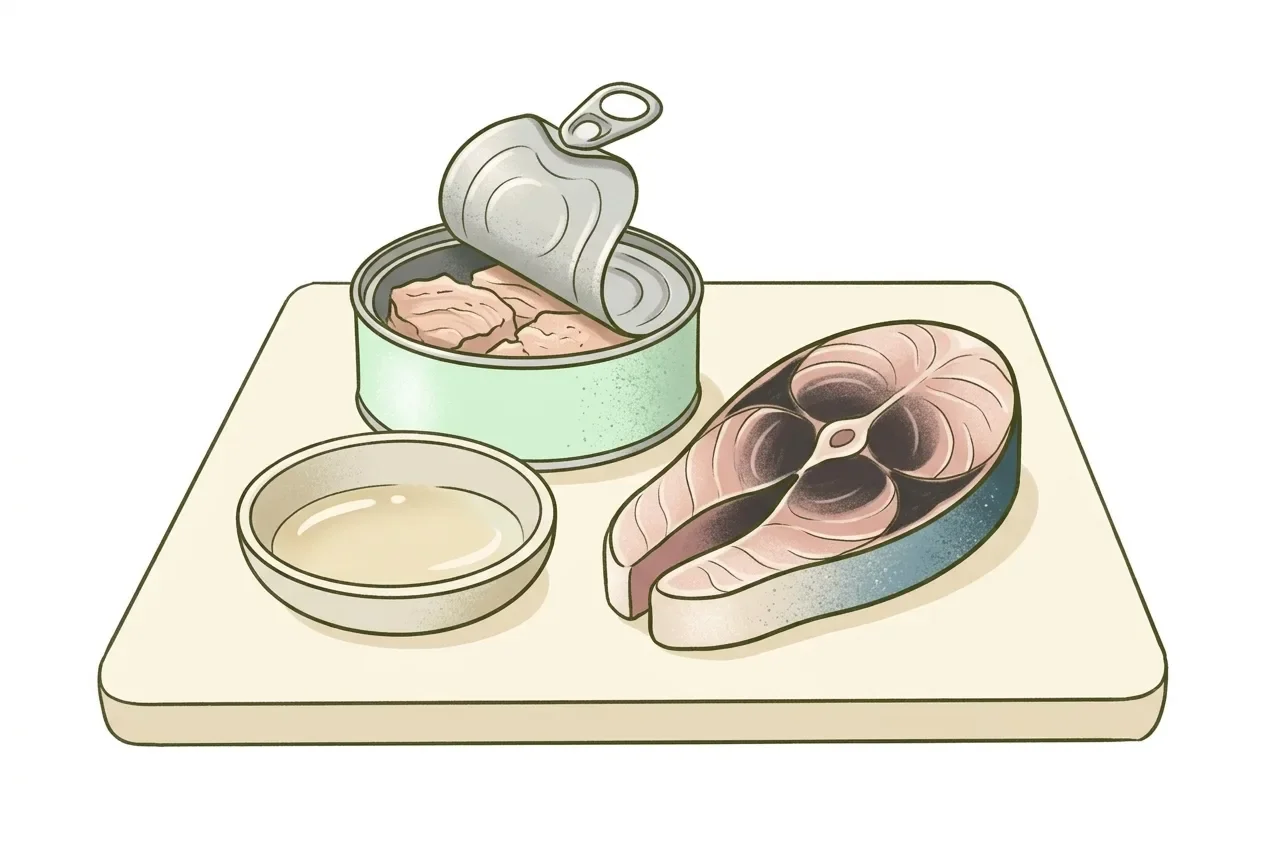
Canned tuna in water has 19.4 to 19.7g of protein per 100g of drained solids, close to the protein in fresh tuna. The exact figure depends on whether the tuna is light or white, and whether it's packed in water or oil. None of that means canning strips protein away.
Fresh yellowfin tuna, raw, has 24.4g of protein per 100g, according to USDA FoodData Central (fdcId 175159). Canned light tuna in water, drained, has 19.4 to 19.7g per 100g (fdcId 173709). Canned white tuna in water, drained, has 23.6g per 100g, closer to fresh (fdcId 175158).
That gap between light and white canned tuna, both in water, is bigger than the gap between white canned tuna and fresh. Species matters more than the can.
No, canning does not remove protein from the fish. What changes the label number is water content and drain weight, not the canning process.
Fresh yellowfin sits at 24.4g protein per 100g raw. Canned white tuna in water lands at 23.6g per 100g drained, under one gram lower. Canned light tuna in water reads lower still, at 19.4 to 19.7g, but that's a difference between species and cut, not proof canning destroys protein.
Oil-packed tuna reads higher again. Canned light tuna in oil, drained, has 29.1g protein per 100g, but also 198 kcal and 8.2g fat, versus 86-90 kcal for water-packed (fdcId 173708 and fdcId 173709).
This page reads that gap as most likely explained by less liquid draining off oil-packed tuna, since oil coats the flesh rather than soaking through it. That's this page's inference from the numbers, not a measured mechanism. Weigh the extra fat against the extra protein rather than treating oil-packed as simply "more protein for free."
| Canned tuna type | Protein per 100g drained | Calories per 100g |
|---|---|---|
| Light, in water | 19.4-19.7g | 86-90 kcal |
| Light, in oil | 29.1g | 198 kcal |
| White (albacore), in water | 23.6g | 128 kcal |
The label's drained-weight rule makes this comparison possible. EU Regulation 1169/2011 requires food packed in liquid to show both net weight and drained weight (Annex IX). A shopper in the EU can read the drained figure off the tin; other markets may only print net weight.
A can's net weight includes the water or oil the tuna sits in, not just the fish. That's why the figures above use drained weight, not the tin's total weight.
Here's an illustrative example, since the cited records don't give a net-to-drained conversion for any specific product. A tin labelled 145g net (illustrative) might drain to roughly 100g of solids; the real fraction varies by product and appears on the label where EU rules require it.
At 19.4g protein per 100g drained, that 100g holds 19.4g of protein. Applying that rate to the full 145g instead would wrongly suggest 28.1g, almost half again too much.
EU rules require drained weight alongside net weight because the liquid itself has almost no protein (Annex IX). Reading the drained figure, not the net weight, is what makes the protein count accurate.
Once that's accounted for, fresh tuna isn't meaningfully ahead. Yellowfin's 24.4g and canned white tuna's 23.6g per 100g are close enough that the choice comes down to convenience, price and species.
The same logic applies to weighing food for logging generally. Whether you weigh food raw or cooked changes the number the same way drained versus undrained weight changes a tuna tin's reading. Both come down to matching your entry to the weight actually eaten.
If you're logging a tin, download Avocalo and search the food database, built from Open Food Facts, USDA FoodData Central and national food-composition tables, for the entry matching your brand and pack.
Weigh it after draining. The USDA figures above are per 100g of drained solids, not the tin's net weight. Weighing the undrained tin would understate the protein per gram, since the liquid adds weight without meaningful protein.
Yes, when both are canned in water. White tuna in water has 23.6g protein per 100g drained, versus 19.4 to 19.7g for light tuna in water, per the USDA records cited above.
This brief doesn't cover cooked fresh tuna, but the same concentration effect applies to other meats: cooking changes weight through moisture loss, not protein content. See does cooking change protein content in meat for the worked USDA comparison.
Published by Petros IT Solutions SRL. Spotted an error? Write to [email protected].