Water weight and the scale
Water Weight vs Fat: How to Tell the Difference
Water weight vs fat: a 1-2 kg jump is almost always water. See the kcal ceiling, glycogen-water math, and a three-day test to check which one you're seeing.
Guides
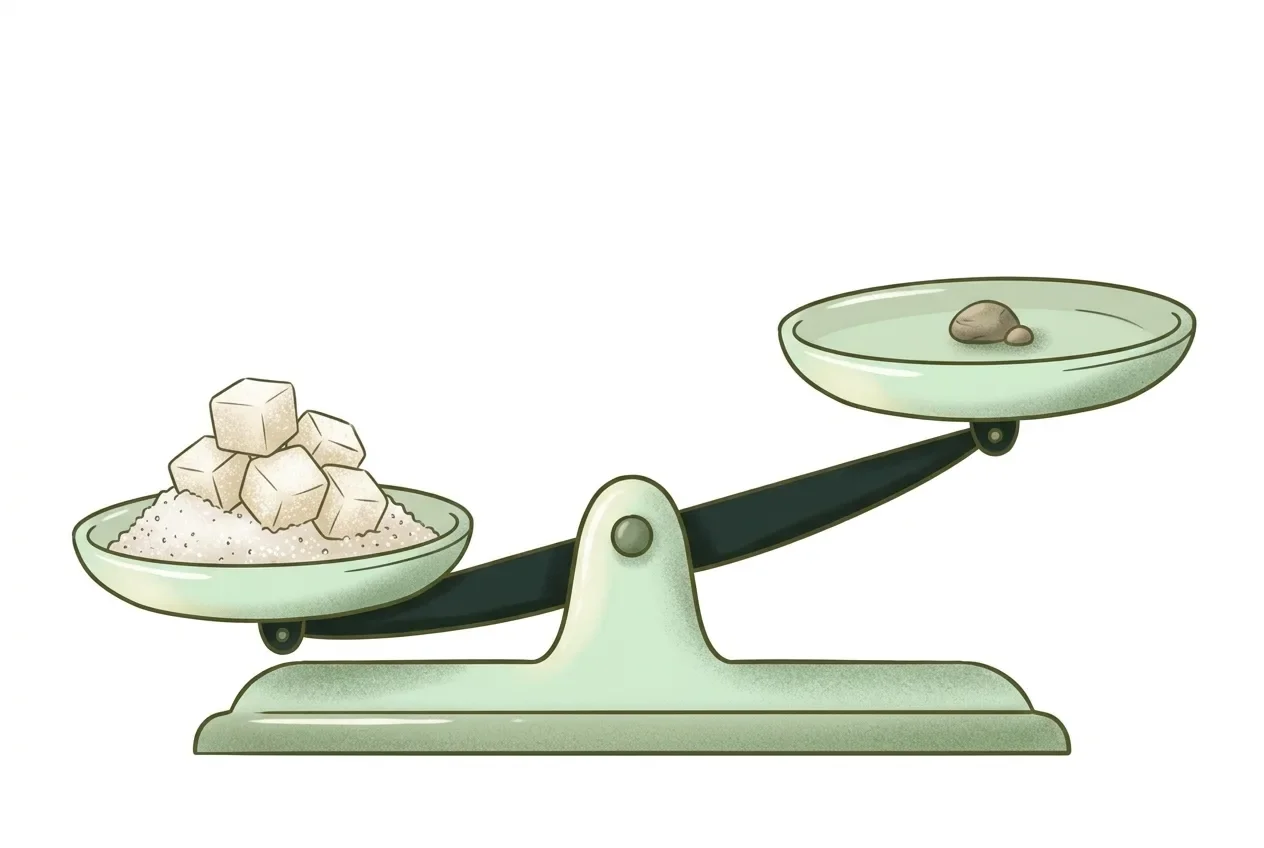
Cheat day weight from one heavy day is almost never fat, and it lasts about two to four days of normal eating before it clears. The number on the scale after a weekend of pizza and brunch reflects glycogen, water and food still moving through the gut. It is not new body fat. A weekly weight pattern described by Orsama and colleagues shows weight rising from Saturday, peaking Sunday and Monday, and falling back down by Friday.
A day of higher-carbohydrate, saltier food does not add body mass in the way the scale suggests. The number moves because the body is storing more of what was eaten. No tissue was built overnight.
Muscle and liver glycogen refill after a carbohydrate-heavy day. Each gram of glycogen is stored with a surprising amount of water. Sodium from restaurant food and salty snacks pulls in extra fluid too. On top of that, a larger volume of food simply sits in the digestive tract for a day or two before it clears.
None of these three processes has anything to do with fat tissue. They are the obvious explanation that turns out to be wrong. A reader assumes the scale is measuring fat gained. In fact it is mostly measuring water the body pulled in to match the food eaten.
Three separate processes add up to the number on the scale, and each clears on its own schedule.
Carbohydrate refill is a major piece for many heavy days. Chan and colleagues measured that stored glycogen holds about 3.21 ± 0.57 grams of water for every gram of glycogen. This was measured in subjects being renourished after depletion. A weekend of pasta, bread and dessert restocks glycogen stores that a normal week keeps only partly full. The water bound to it shows up immediately as weight.
Sodium is the second piece. Restaurant meals and salty snacks push more sodium into the body than usual. That sodium expands the fluid outside cells to keep concentration balanced. This fluid shift adds weight without adding fat. It eases as sodium intake returns to normal and the kidneys re-equilibrate.
Food volume itself is the third piece. A bigger plate, a bigger portion and dessert on top all sit in the stomach and intestines for a day or two. They wait there before being digested and cleared. That mass registers on a scale exactly like anything else being weighed.
Yes. Orsama and colleagues tracked body weight across many weeks. They found a consistent weekly pattern: weight starts climbing on Saturday, peaks on Sunday and Monday, then falls from Tuesday onward and reaches its lowest point on Friday. The study detrended the data to find this shape, so it does not give a kilogram figure for the swing. It only gives the timing.
That timing matches what a Monday morning weigh-in shows. A reader who steps on the scale two mornings after a heavy Saturday and Sunday is catching the pattern at its peak, as the study describes it, not some unusual or alarming extreme.
The intake figures below are illustrative, chosen to make the arithmetic easy to follow rather than lifted from any single reader's weekend. The glycogen-to-water ratio itself is the sourced figure from Chan et al., 1982.
| Step | Figure | Source |
|---|---|---|
| Extra carbohydrate eaten over the weekend (illustrative) | 300 g | illustrative |
| Water bound per gram of glycogen | 3.21 g | Chan et al., 1982 |
| Glycogen-water weight from that carbohydrate | 300 g × 3.21 g ≈ 963 g | calculated |
| Total Monday jump (illustrative reader example) | 2,000 g | illustrative |
| Remainder (sodium fluid and gut contents) | 2,000 g − 963 g ≈ 1,037 g | calculated |
Suppose a reader ate roughly 300 grams of extra carbohydrate across Saturday and Sunday. This is an illustrative figure meant to show the method, not a measured intake. Multiplying by the 3.21 grams of water Chan's group measured per gram of glycogen gives about 963 grams of glycogen-bound water alone.
If the reader's total Monday jump was 2 kg, that leaves roughly 1,037 grams still unaccounted for. That remainder is where sodium-driven fluid retention and food still sitting in the digestive tract belong. Neither has a single clean multiplier the way glycogen does.
This arithmetic shows why a large share of the 2 kg can be explained without any fat at all. A reader can run the same sum with their own weekend's carbohydrate total to see how the split falls for them.
Very little, and the energy math shows why. A kilogram of body fat tissue stores roughly 5,100 to 8,000 kcal, since fat tissue is only 54–85% pure fat (Martin et al., 1994) rather than pure triglyceride. Gaining a full 2 kg of actual fat tissue in one day would require eating at least about 10,200 kcal above maintenance in that single day, using the leanest figure of 5,100 kcal/kg. That is far beyond what one indulgent meal, or even a full day of heavy eating, typically supplies.
This article uses the 5,100 kcal/kg figure, the low end of the measured range for body fat tissue, because that makes the case against fat the hardest one to claim. Avocalo's own fat-or-water calculator uses the same leanest figure for the same reason, so that a reader checking their own overnight gain against the tool is not shown an inflated case against fat. Both pages point to the same conclusion: one day's gain is overwhelmingly water, not fat.
Even a smaller surplus on a single heavy day converts to a fraction of the 5,100 kcal-per-kg figure. The fat gained from one big day is measured in tens of grams, not kilograms. That is why the scale's 2 kg jump is overwhelmingly water and food weight, not new tissue.
Several things influence how quickly the number comes back down, based on the same mechanisms driving it up.
If tracking your weekday number feels harder than it should, the same care that goes into weighing food applies to weighing yourself: see how to count calories accurately for the measurement habits that keep any daily number meaningful.
A meal photo cannot tell a reader whether Sunday's number is glycogen, sodium or gut contents, and Avocalo does not claim to sort them out. What it can do is log meals from a photo. An AI model estimates the foods, portions, calories and macros, which the user reviews and edits before saving.
Tracking which meals were logged on the days weight climbed lets a reader connect the scale's jump to a specific day's eating, rather than guessing. The app also tracks weight itself alongside meals, so the same trend Orsama's data describes becomes visible in one place. Log meals with a photo to see which day caused the jump at Avocalo's download page.
Yes, and it is very unlikely to be fat. A 2 kg overnight jump fits within what glycogen water, sodium-driven fluid and food volume together can produce, as the worked example above shows using the Chan et al. glycogen-water ratio.
You can, but expect a high number that reflects the weekly pattern Orsama's data describes, not a stable trend. A single post-weekend weigh-in is more useful as one point in a longer series than as a verdict on its own.
There is no sourced figure in this brief for that specific effect, so no claim is made either way here. The mechanisms that do explain the fall, lower carbohydrate and sodium intake and time for digestion, are covered above.
The scale itself is accurate, but a single reading still mixes day-to-day fluid shifts with any real underlying change. That is why the Orsama weekly pattern and a multi-day trend read more clearly than any one morning's number.
This article is educational and not medical or dietary advice. Published by Petros IT Solutions SRL. Corrections: [email protected].