Water weight and the scale
Water Weight vs Fat: How to Tell the Difference
Water weight vs fat: a 1-2 kg jump is almost always water. See the kcal ceiling, glycogen-water math, and a three-day test to check which one you're seeing.
Guides
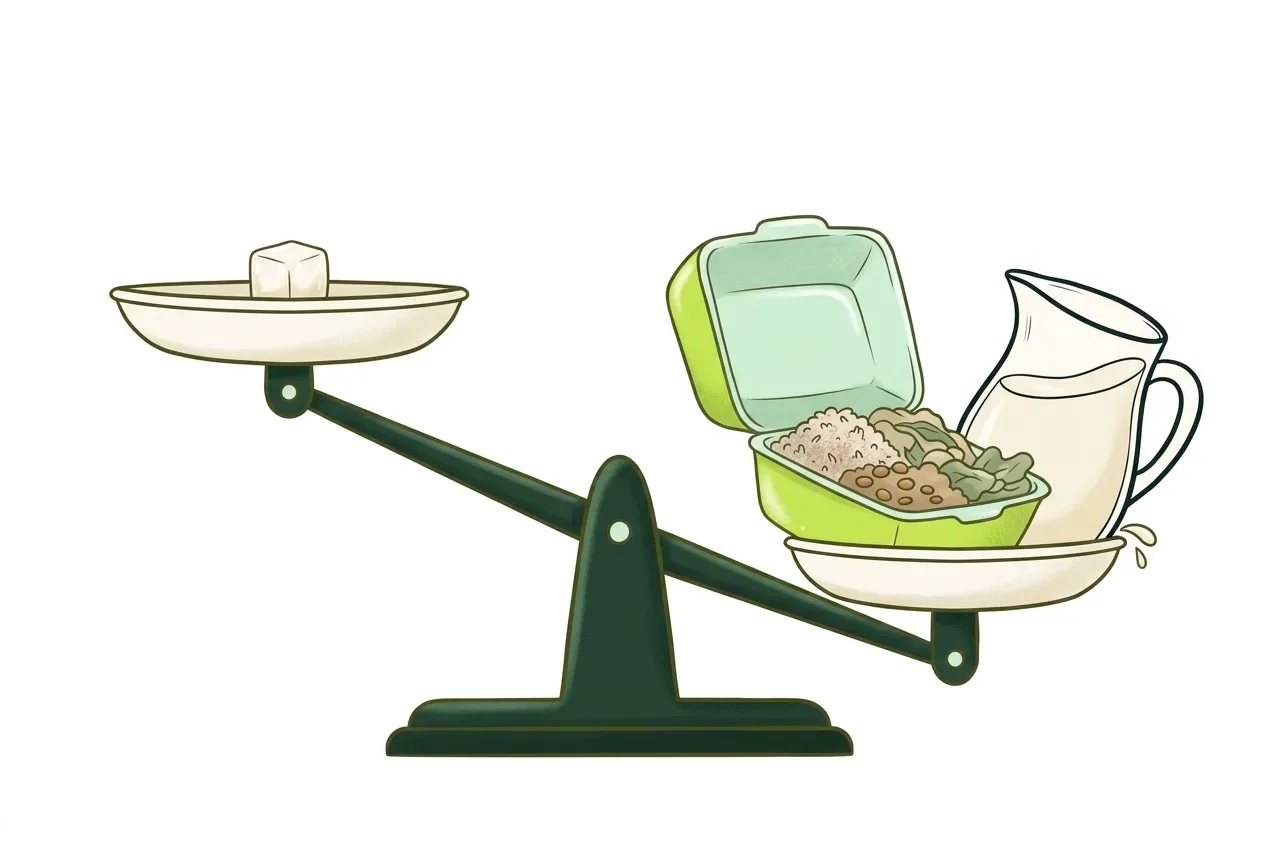
Weight gain after eating chinese food is almost always water and food mass, not fat. A takeaway dinner is usually high in sodium and refined carbohydrate, both of which hold onto water in the body, and the plated meal itself has weight before it's even digested. The scale typically settles back to its usual number within a few days, though no study has measured the exact timeline for a single meal.
A 1.5 kg overnight jump feels alarming, but fat can't move that fast. A commonly used approximation is that one kilogram of body fat holds roughly 7,700 kcal, so gaining a real kilogram of fat in one sitting would mean eating thousands of calories beyond what any single meal contains. This is illustrative math, not a measurement of any specific dish, but it shows why the arithmetic doesn't support a fat explanation.
The number on the scale the next morning is almost entirely water and the meal's own weight, not new tissue. Three things add up: sodium-driven fluid, carbohydrate stored with water attached, and the plated food and liquid still sitting in your gut.
It's overwhelmingly water, held in place by sodium and by carbohydrate stored as glycogen. Fat gain requires a sustained calorie surplus over days or weeks, not one meal. A single dinner, however large, changes what's sitting in your gut and tissues long before it changes what's stored as fat.
The distinction matters because water retention resolves on its own. Nothing about a heavier reading the morning after a takeaway needs correcting through eating less the next day.
Soy-based sauces are the main source. Soy sauce itself carries about 5,490 mg of sodium per 100 g, according to USDA FoodData Central (Soy sauce, made from soy and wheat, shoyu). The FDA's daily reference is under 2,300 mg of sodium, with average American intake closer to 3,400 mg, per the FDA's own page on sodium (FDA, Sodium in Your Diet).
A few tablespoons of a soy-based sauce spread across a shared meal can easily push sodium for that one dinner past the entire day's reference amount. Rice itself contributes almost none of this: cooked white rice without added salt carries close to 1 mg of sodium per 100 g (Rice, white, long-grain, regular, enriched, cooked). The salt comes from the sauce and seasoning, not the starch underneath it.
Extra sodium draws water into the space around your cells to keep the concentration of salt in your blood steady. That water has to come from somewhere, and it shows up as extra fluid volume, not fat tissue.
A controlled study raised sodium intake for weeks at a time, under lab conditions in a space-simulation trial. It measured an 882 ± 99 g increase in body weight tied to the higher, sustained salt load (Rakova et al.). That study ran the higher-salt diet for weeks, not one meal. It shows the direction and rough size of a sodium-driven weight shift, not a figure a single takeaway dinner would match on its own.
Carbohydrate is stored in muscle and liver as glycogen, and glycogen doesn't sit there dry. Research first published by Olsson and Saltin in 1970 measured roughly 3 g of water held per 1 g of glycogen stored, a ratio confirmed again in a 2015 study in the European Journal of Applied Physiology (Olsson & Saltin, 1970). Those studies measured glycogen refilling after exercise, not after a takeaway dinner, but the same storage chemistry applies to a meal heavy in rice or noodles.
Eat a large plate of noodles and rice on top of a normal day's intake, and the extra carbohydrate gets stored with roughly three times its own weight in water. That water is real, it sits on the scale, and it isn't fat.
On top of the fluid shifts, the food itself has mass. Illustrative figure: say a takeaway dinner for one, plated, weighs close to 1 kg before digestion. That weight sits in the stomach and gut for hours before it's absorbed or passed. During that window it's simply mass on the scale, like standing there holding a bag of the same weight. None of the brief's sources measured the mass of a generic takeaway meal directly, so this figure is a stand-in to make the arithmetic concrete.
The 1.5 kg total and the meal-mass figure are illustrative, chosen to add up cleanly. The sodium and glycogen figures below are cited to the sources already named in this article.
| Source of the extra weight | Illustrative or sourced | Approximate contribution |
|---|---|---|
| Food and liquid mass in the gut | Illustrative | ~1.0 kg |
| Sodium-driven fluid retention | Direction and rough size sourced to Rakova et al. | ~0.3 kg |
| Glycogen-bound water from rice or noodles | Ratio sourced to Olsson & Saltin | ~0.2 kg |
| Total | ~1.5 kg |
The arithmetic: 1.0 kg of plated food, plus roughly 0.3 kg of fluid drawn in by sodium. That's well under the ~0.88 kg (882 ± 99 g) Rakova's controlled trial measured, and that trial used weeks of sustained higher salt intake. Add roughly 0.2 kg of water bound to newly stored glycogen, and the total comes to about 1.5 kg. None of it is fat, and none of it required a calorie surplus large enough to build new tissue.
A reader can redo this with their own order: weigh the plated meal, note how salty and how starchy it was, and expect a broadly similar split between mass, sodium-water, and glycogen-water.
This mechanism isn't specific to one cuisine. Pizza combines a salted, sauced topping with a refined-flour crust, hitting both the sodium and the carbohydrate side at once. Sushi rice is seasoned rice, and soy sauce is often added at the table, so a sushi dinner can trigger a similar combination even though it looks lighter on the plate. A meal heavy in both sodium and refined carbohydrate can produce a similar overnight number, by the same mechanism, whatever cuisine it comes from.
The food mass clears as digestion finishes, typically within a day. Sodium-driven fluid resolves as the kidneys restore normal sodium balance.
The cited sodium study tracked salt phases of a month or more rather than a single meal, so it does not report a resolution timeline for one dinner's sodium load. The one to three days sometimes quoted for this kind of short-term sodium shift is this article's own reasoning about how quickly a temporary salt load is likely to clear, not a figure measured in the cited research.
Glycogen-bound water is used up as that glycogen is drawn on for energy over the following days. Neither of the cited glycogen studies measured how long that takes after a single high-carbohydrate meal, so no specific day count can be attributed to them.
None of this requires eating less to fix it. The scale settles back on its own as sodium and glycogen levels normalize.
Avocalo lets you photograph a meal and get an AI-generated estimate of calories, protein, carbohydrate and fat, which you can review and edit before saving. What it can't do is see hidden sauce or exact portion size from the image alone, since the estimate comes from reading the photo, not from weighing the food or matching it to a database.
That makes a heavy, sauced dinner exactly the kind of meal where the first estimate needs adjusting. You can work out the oil and sauce a takeaway photo can't show separately, then log the meal in Avocalo and edit the estimate before saving so the sauce and portion size are reflected accurately.
No, but expect the number to be temporarily higher for reasons unrelated to fat. Weighing at a consistent time and tracking the trend over several days, rather than reacting to one reading, gives a truer picture than skipping the scale.
There's no evidence in the sources cited here that drinking more water worsens sodium-driven retention. A single dinner's salt load resolves on its own over the following days. That happens because the body's fluid response is tied to the sodium itself, not to how much plain water you drink separately.
No. Building a kilogram of fat tissue takes a commonly used approximation of roughly 7,700 kcal beyond what your body uses, an amount no single meal typically contains. Weight gain observed the next morning comes from food mass, sodium, and glycogen-water, not new fat.
It reduces the sodium half of the mechanism, since less sodium means less fluid drawn into tissue. It won't change the carbohydrate side, so a meal heavy in rice or noodles can still show a similar water-weight bump even with a lower-sodium sauce.
This article follows Avocalo's editorial policy on sourcing and illustrative figures. You can also check whether your own overnight jump could be fat. Published by Petros IT Solutions SRL. Spot an error? Write to [email protected].