Hunger and cravings
Is It Normal to Be Hungry Every 3 Hours?
Is it normal to be hungry every 3 hours? Yes, and ghrelin timing plus gastric emptying studies explain exactly why the rhythm forms.
Guides
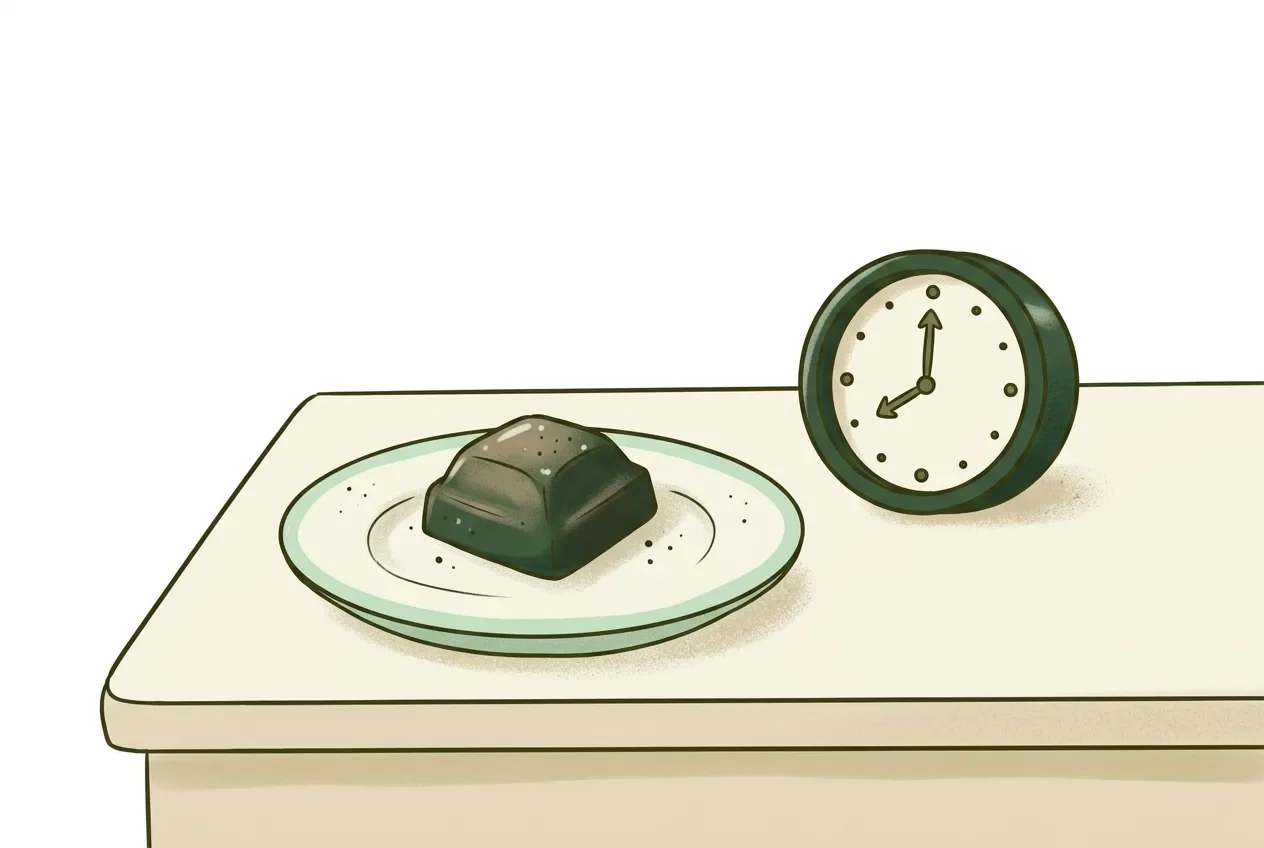
A craving for chocolate at 9 p.m. is not the same signal as hunger, and it is not a sign the diet is too strict. A craving is a wish for one specific food, while hunger is a body-wide signal that any food would settle. In trials of sustained calorie restriction, cravings for the foods people ate less of got weaker over the weeks, not stronger. The pull toward something sweet after dinner has a cause, but it is not the deficit failing.
Hunger is general. Almost any food will quiet it, and it builds slowly as the hours since a meal pass.
A craving is specific. It targets one food or food type, and it can show up with reduced hunger, not more of it.
Hill's 2007 review in Proceedings of the Nutrition Society states that "craving is not synonymous with increased eating." Craved foods are not always eaten, nor are eaten foods always craved. Cravings occur "against a backdrop of reduced hunger but increased negative affect," meaning mood, not appetite, is what moves.
So the 9 p.m. pull toward chocolate specifically, felt after a normal dinner, fits the pattern of a craving, not stomach-level hunger. That distinction matters because the two call for different responses. Hunger asks to be fed. A craving is a cue-driven wish that can be noticed without being treated as an emergency.
The body's internal clock raises appetite toward evening on its own, independent of what or when someone has eaten that day.
Scheer, Morris and Shea (Obesity, 2013) ran a 13-day inpatient protocol with 12 healthy adults. They spread meals and sleep evenly across the circadian cycle to isolate the clock's own signal. Hunger reached its lowest point around 8 a.m. and its highest around 8 p.m., on the body's internal time, regardless of intake.
That means an evening craving is not proof of an unmet need from the day's food choices. It lines up with a daily rhythm that exists whether or not the deficit is well designed. Hill's review adds that cravings, more broadly, "happen at all times of day," so evening is a common cluster point, not the only one.
Not on its own, and the evidence points the other way over time.
Kahathuduwa, Binks, Martin and Dawson (Obesity Reviews, 2017) pooled 8 trials of calorie restriction lasting at least 12 weeks. Overall food cravings fell during sustained restriction, with a pooled effect size of −0.246 (95% CI −0.490 to −0.001).
The upper bound of that interval sits right at zero, so the drop is at the edge of what the trials could confirm, but the direction across every category in the analysis is consistently downward. The same meta-analysis found cravings for sweet food fell the most of any category, at −0.410 (95% CI −0.626 to −0.194), more than high-fat, starchy or fast-food cravings.
There is a real tension worth naming. Hill's review also cites diary studies where dieters reported more cravings than non-dieters. Their cravings were stronger and slower to fade for foods they had recently tried to restrict. That is a snapshot comparing dieters to non-dieters at one point. The Kahathuduwa trend is different: it tracks the same people's cravings as restriction continues over months. Both can be true. A diet can feel more craving-prone than eating freely, while those cravings still decline the longer the restriction holds.
The 2017 meta-analysis broke the drop down by food category, with a confidence interval for each, and every category moved the same direction.
| Craving category | Pooled effect size (95% CI) | Direction |
|---|---|---|
| Overall cravings | −0.246 (−0.490 to −0.001) | Fell |
| Sweet food | −0.410 (−0.626 to −0.194) | Fell most |
| Fast food | −0.340 (−0.633 to −0.048) | Fell |
| Starchy food | −0.288 (−0.517 to −0.058) | Fell |
| High-fat food | −0.190 (−0.343 to −0.037) | Fell |
Longer restriction periods produced larger reductions. The authors describe this as consistent with de-conditioning. Restricting a food while its cues stay present, seeing chocolate in a shop, smelling it at a party, breaks the learned link between the cue and the craving over time. That is a different story than the craving building pressure until willpower snaps.
That reframes the reader's evening chocolate craving. It is not a warning sign about the deficit. It is closer to a cue that has not yet had enough weeks of exposure without follow-through to weaken.
Chocolate is not like other food cravings in how long it lingers, according to Hill's review.
Hill found that "cravings for chocolate were found to be stronger and to disappear much more slowly than those for other sweet or savoury foods." They were, however, "equally likely to result in eating" as cravings for other foods. No effect size is given for this specific comparison in the source, only the qualitative pattern the review reports.
That detail may explain why an evening craving for chocolate specifically, rather than a craving for "something sweet" in general, can feel stickier than the trial data on sweets overall would suggest. It fits inside the same overall picture of cravings fading with restriction. It is a slower fade for this one food, on the evidence in this review.
A craving passing through does not need managing as a crisis. It can be noticed and left alone, or logged and looked at later.
Seeing where a craved food, or its absence, sits on a timeline of meals can show whether the same cue-time pattern repeats for that individual. No single evening needs to become a verdict on the whole week.
A reader building a meal around a craving from scratch, rather than a packaged sweet, can total the recipe's calories with Avocalo's free recipe-portion calculator, which adds up ingredients or a total and returns calories per serving. That keeps the focus on what was actually eaten, not on the craving itself as a judgment.
For a reader who wants to understand a different piece of the appetite picture, a sibling guide covers a separate mechanism: why a carb-only meal wears off fast and leaves you hungry again. It explains how meal composition affects how soon hunger returns, distinct from the cue-driven craving described here.
If the craved food does get eaten, logging it is no different from logging anything else on the timeline.
Avocalo's photo logging lets a user photograph a meal or pick one from the gallery. An AI vision model then estimates the foods, portions, calories and macros. The user reviews and edits the result before saving. A logged item, craving or not, is an approximate photo estimate, not a lab measurement. It becomes one entry on a timeline rather than a mark against the day.
The app records what was eaten, same as any other meal, and the reader can look back at the log later to see whether a pattern repeats for them. Anyone who wants to try this can find the app on the App Store or Google Play.
No source in this article's evidence base supports a nutrient-deficiency explanation for cravings. Hill's 2007 review defines craving as cue-driven and mood-linked, not as a signal of a missing vitamin or mineral. Treat a craving as psychological, not nutritional, based on the available research.
Yes, though the trend across trials is downward, not upward. Kahathuduwa et al. (2017) found cravings fell over 12 or more weeks of restriction, with longer periods producing larger drops. An occasional craving weeks in does not contradict that overall fall.
The reviewed research does not test this directly. Hill's review notes craved foods are not always eaten and eaten foods are not always craved, so the two are not tightly linked. No trial in this article's sources measured what happens after eating a craved food once.
The body's circadian clock raises appetite toward evening on its own. Scheer, Morris and Shea (2013) measured hunger peaking around 8 p.m. on the internal clock in a controlled 13-day protocol, independent of food intake that day.
Published by Petros IT Solutions SRL. Corrections: [email protected].